CEV Volleyball Trophy: A Practical Guide to 3D Printing and Customization
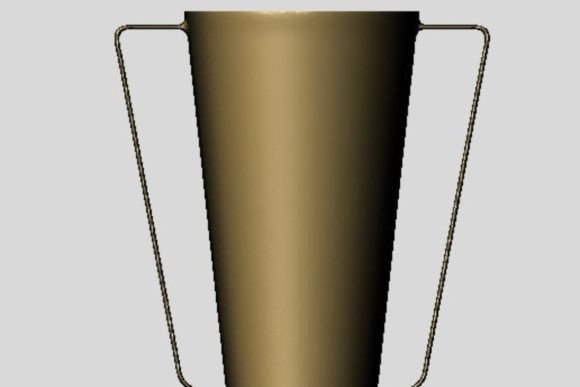
The intersection of sports memorabilia and additive manufacturing has created new opportunities for fans, creators, and small business owners to produce customized physical assets. The CEV Volleyball Trophy represents a specific niche within this space, offering a digital model that replicates the prestigious award associated with European volleyball competitions. Unlike mass-produced merchandise, this 3D printable asset allows users to fabricate the trophy on demand, scaling it to fit specific spatial or functional requirements. For professionals in marketing, education, or event planning, as well as serious hobbyists, understanding the technical and practical nuances of this model is essential before committing printer time and materials.
This digital asset is more than a static replica; it is a versatile base file designed for modification. Whether the goal is to create a full-scale display piece for a club lobby, a miniature keychain for team members, or wall art for a content studio, the geometry supports significant adaptation. However, achieving a professional finish requires navigating specific FDM (Fused Deposition Modeling) constraints. This evaluation breaks down the usability, technical requirements, and strategic value of the CEV Volleyball Trophy 3D print file for those looking to integrate it into their projects or workflows.
Technical Considerations for FDM Printing
The most critical factor when working with the CEV Volleyball Trophy model is its geometric complexity. Volleyball trophies typically feature organic curves, spherical elements, and intricate base details that defy standard layer adhesion logic. It is inevitable to print this model with support structures on FDM machines. Attempting to print without adequate support will result in catastrophic failure or severe deformation of the overhanging sections. Users must approach the slicing process with a strategy focused on support interface quality rather than just structural integrity.
For optimal results, consider the following technical adjustments during the preparation phase:
- Support Interface Layers: Enable a dedicated support interface using a different material or adjusted density. This creates a smoother separation point between the support structure and the trophy surface, significantly reducing post-processing sanding time.
- Tree or Organic Supports: Traditional linear supports can be difficult to remove from complex trophy geometries. Tree supports often provide better contact points for spherical shapes while using less filament and leaving fewer scarring marks on the visible surfaces.
- Layer Height Selection: Because the trophy features curved surfaces, standard 0.2mm layers may result in visible stepping artifacts. Reducing layer height to 0.12mm or 0.08mm for the final shell can dramatically improve surface fidelity, which is crucial if the piece is intended for display or photography.
- Orientation Strategy: Rotate the model to minimize supports on the most visually prominent faces. Sometimes printing at an angle, despite requiring more support material overall, preserves the aesthetic quality of the primary viewing side.
Understanding these limitations upfront prevents wasted material and ensures the final output meets professional standards. The necessity of supports is not a flaw in the design but an inherent characteristic of translating complex sculptural forms into layered manufacturing.
Scalability and Functional Versatility
The primary advantage of possessing a high-quality 3D printable file for the CEV Volleyball Trophy is the freedom to scale. Digital scalability transforms a single asset into multiple distinct products or tools. This flexibility is particularly valuable for entrepreneurs and marketers who need consistent branding across different physical touchpoints without sourcing separate molds or manufacturers.
Full-Scale Replicas and Display Pieces
When printed at 100% scale or larger, the trophy serves as a centerpiece for volleyball clubs, training facilities, or sports bars. In this context, dimensional accuracy and surface finish are paramount. Users should prioritize high-infill percentages or perimeter-heavy settings to ensure the trophy has appropriate weight and durability. A hollow, lightweight print at this scale can feel insubstantial; adding internal infill or filling the base with weighted material post-print enhances the perceived value and stability of the object.
Miniaturization for Keychains and Merchandise
Scaling the model down to 20-30% creates functional merchandise such as keychains, bag tags, or zipper pulls. At this size, fine details may be lost depending on nozzle diameter. Switching to a 0.25mm nozzle can preserve definition in smaller prints. Furthermore, miniaturized versions require structural reinforcement; increasing wall counts prevents the thin stems or handles from snapping under daily use. This application is ideal for team gifts, tournament favors, or low-cost promotional items that maintain brand recognition.
Adaptation for Wall Art and Decor
The 3D model can be modified in CAD software to serve as wall art. By slicing the model vertically or creating a relief version, users can produce flat-backed trophies that mount flush against walls. This adaptation saves significant print time and material compared to full volumetric prints while retaining the iconic silhouette. For content creators and bloggers, these wall-mounted versions provide excellent background texture for video production or photography without occupying desk space.
Evaluating Quality and Post-Processing Requirements
A raw FDM print of the CEV Volleyball Trophy rarely achieves a retail-ready finish immediately off the build plate. Professionals evaluating this asset must factor post-processing labor into their cost and time analysis. The quality of the final product is directly correlated to the effort invested after printing.
Sanding is unavoidable due to the required support structures. Start with coarse grit to remove support nubs and progress through finer grits to eliminate layer lines. For PLA prints, vapor smoothing or epoxy coating can achieve a glass-like finish that mimics injection molding or casting. Metallic spray paints or chrome effect markers are commonly used to replicate the traditional gold or silver appearance of the actual CEV trophy. However, metallic finishes tend to highlight surface imperfections rather than hide them. Therefore, achieving a smooth substrate is more important when aiming for a realistic metallic look than when using matte team colors.
Consistency across multiple prints is another consideration. If producing a batch of trophies for an event, document exact slicer settings, temperature profiles, and post-processing steps. Variations in ambient humidity or filament batch can affect color matching and dimensional tolerance. Maintaining a standardized workflow ensures that every unit in a series looks identical, which is critical for professional presentations or commercial sales.
Strategic Value for Target Audiences
Different user groups derive distinct benefits from the CEV Volleyball Trophy 3D print file. Understanding your specific use case helps determine whether this asset aligns with your objectives.
Volleyball Clubs and Academies: For organizations, this model offers a cost-effective way to recognize achievement without the expense of custom metal casting. Coaches and administrators can produce awards for internal tournaments, MVP recognitions, or retirement ceremonies on their own schedule. The ability to customize the base with engraved names or dates adds personal significance that generic store-bought trophies cannot match.
Content Creators and Marketers: Sports bloggers, podcasters, and social media managers benefit from having tangible props. A physical trophy enhances visual storytelling and provides a recognizable symbol for thumbnails, stream overlays, or giveaway prizes. The ability to print replacement parts or modified versions means the prop can evolve with the content strategy without recurring procurement costs.
Educators and STEM Programs: The trophy serves as an engaging teaching tool for 3D printing and design classes. Its complex geometry challenges students to think critically about support generation, orientation, and post-processing. It bridges the gap between abstract technical skills and culturally relevant objects, increasing student engagement and providing a concrete example of additive manufacturing applications in sports culture.
Small Business Owners and Makers: For vendors in the sports niche, this model expands product catalogs with minimal inventory risk. Print-on-demand capabilities mean capital is not tied up in pre-manufactured stock. However, sellers must ensure they have the appropriate licensing rights for commercial use of the CEV trademark and design before listing products publicly.
Practical Limitations and Risk Management
While the CEV Volleyball Trophy 3D print offers significant utility, it is not without limitations. Recognizing these constraints helps manage expectations and avoid project failures.
First, intellectual property considerations are non-negotiable. The CEV name and trophy design are likely protected trademarks. Personal use, educational projects, and internal club awards generally fall under acceptable use, but commercial sale requires explicit licensing. Always verify legal permissions before monetizing any derivative works.
Second, FDM technology has inherent strength anisotropy. Layer adhesion is weaker than intra-layer bonds, meaning the trophy may be susceptible to breaking along layer lines if dropped or subjected to lateral force. For functional items like keychains or trophies that will be handled frequently, consider annealing the print or using engineering-grade filaments like PETG or ABS for improved durability over standard PLA.
Third, the time investment for high-quality results is substantial. Between printing with supports, removal, sanding, priming, and painting, a single professional-grade trophy can require several hours of active labor. This makes the asset less suitable for high-volume, low-margin production unless automated post-processing solutions are available. It excels in bespoke, low-volume, or high-value applications where customization justifies the labor input.
Finally, file integrity varies between sources. Before beginning a project, validate the STL or 3MF file for manifold errors. Non-watertight meshes cause slicing failures and wasted prints. Running the file through repair software or checking community feedback on the model page can prevent frustration. A well-maintained digital asset saves time; a corrupted one consumes it.
The CEV Volleyball Trophy 3D printable model stands as a functional bridge between digital design and physical celebration. Its value lies not merely in replication, but in the adaptability it grants users across diverse contexts. By respecting the technical demands of FDM printing, investing in proper post-processing, and aligning the asset with specific strategic goals, professionals and hobbyists alike can transform a digital file into a meaningful, tangible object. Success depends on treating the print not as a finished product, but as a raw component in a broader creative or operational workflow.