Clay Cutter STL- Sakura Cherry Blossom: Integrating Digital Assets into Creative Workflows
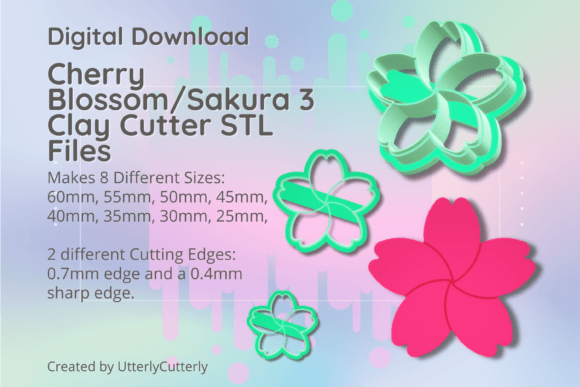
The Clay Cutter STL- Sakura Cherry Blossom represents a specific intersection between digital fabrication and tactile artistry. For creators, small business owners, and hobbyists utilizing 3D printing technology, this digital download is not merely a decorative file; it is a functional production asset. This bundle of cherry blossom sakura flower petal clay cutters serves as a foundational tool for manufacturing earrings, pendants, barrettes, cookies, and fondant decorations. Understanding how to integrate these STL files into your existing workflow ensures consistent quality, reduces material waste, and maximizes the versatility of your 3D printer.
In the broader context of creative production, acquiring the Clay Cutter STL- Sakura Cherry Blossom fits into the pre-production and prototyping phases. Before committing to bulk manufacturing or finalizing a seasonal product line, having access to precise, scalable digital tools allows for rapid iteration. Whether you are planning a spring jewelry collection or designing edible floral arrangements for an event, these files bridge the gap between concept and physical execution. The ability to print your own tools on demand eliminates supply chain delays associated with purchasing physical metal or plastic cutters, granting immediate autonomy over your production schedule.
Technical Specifications and Printer Compatibility
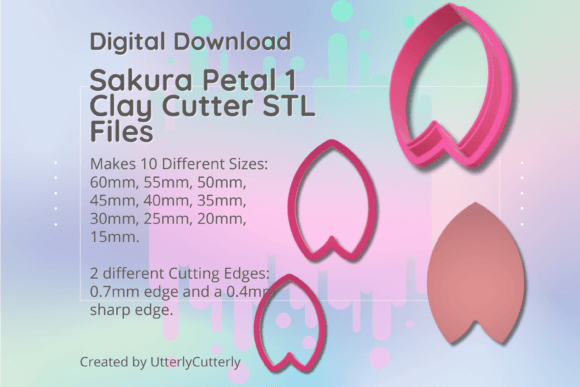
Successful implementation of any STL file relies on understanding its technical parameters. This pack includes two distinct cutting edge profiles designed for different applications within your workflow. Selecting the correct profile prevents failed prints and ensures the cutter performs as intended for your specific medium.
- Standard Edge: Features a 0.7mm wall thickness with a 3mm thick base and a total height of 12mm. This robust profile is ideal for stiffer materials like cookie dough or thicker polymer clays where structural rigidity during the cutting motion is paramount.
- Sharp Edge (SE): Abbreviated as SE in the file names, this variant features a 1mm support wall tapering to a 0.4mm cutting edge. It maintains the same 3mm base and 12mm height but offers superior precision for delicate work, such as thin porcelain clay or detailed fondant.
Both cutter types share standardized dimensions that facilitate organization. The base thickness of 3mm provides sufficient surface area for grip and stability during use, while the 12mm height accommodates various material depths without the cutter bottoming out prematurely. When preparing your slicer software, ensure your nozzle diameter aligns with these wall thicknesses. A 0.4mm nozzle is standard for the Sharp Edge variant, while the Standard Edge can be printed reliably with both 0.4mm and 0.6mm nozzles. Verifying these settings before printing prevents dimensional inaccuracies that could render the tool unusable.
Strategic Sizing for Product Diversification
Versatility in product design often hinges on scale. This digital bundle addresses that need by providing ten distinct sizes, measured from the longest ends of the cutter. This graduated sizing system allows creators to curate custom combinations without needing to modify the source geometry manually. The available sizes are:
- 60mm
- 55mm
- 50mm
- 45mm
- 40mm
- 35mm
- 30mm
- 25mm
- 20mm
- 15mm
Integrating this size range into your workflow enables efficient product tiering. For example, a jewelry maker might utilize the 15mm and 20mm cutters for stud earrings, the 30mm and 35mm sizes for dangle earrings or charms, and the 50mm+ sizes for statement pendants or hair clips. Similarly, bakers can create visual hierarchy in dessert presentations by pairing large 60mm blossoms with smaller 20mm accents. Having all sizes contained within a single digital download streamlines asset management, reducing the time spent searching for individual files when scaling a project up or down.
Embossing Considerations and Material Preparation
A critical operational detail for this specific STL set involves the embossing lines. If your chosen design includes internal detailing, these lines stand at 10.5mm tall. This specification dictates your material preparation process. To achieve a clean impression without the embosser hitting the backing surface or distorting the clay, you must work with material thicker than 1.5mm.
This constraint should inform your rolling and slabbing procedures. When setting up your pasta machine or clay roller, establish a minimum thickness guide that accounts for this 1.5mm threshold plus additional depth for the cut itself. Failing to account for this clearance results in compressed details and uneven edges. By treating the embossing height as a fixed parameter in your setup checklist, you maintain consistency across batches. This is particularly relevant for entrepreneurs producing inventory; establishing a standard slab thickness that accommodates the deepest embossing feature in your toolkit reduces variability and quality control issues downstream.
Workflow Integration and Asset Management
Digital assets require the same organizational rigor as physical inventory. Upon downloading the Clay Cutter STL- Sakura Cherry Blossom files, immediate organization prevents future friction. Create a dedicated directory structure that separates the Standard and Sharp Edge variants. Naming conventions matter; keeping the "SE" abbreviation visible in filenames allows for quick identification during high-pressure production runs.
Consider creating print presets specifically for these cutters. Since the base and height dimensions are constant across all ten sizes, you can develop a universal slicing profile that optimizes infill, perimeter count, and layer height for this specific geometry. Saving these presets reduces setup time for future prints. Furthermore, because new STL files are added to the store weekly, maintaining a modular folder system allows you to expand your library systematically. Cross-referencing new releases with your existing Sakura collection enables you to build cohesive themed sets, enhancing the perceived value of your finished products.
Material Versatility and Application Contexts
While primarily marketed for clay and cookies, the utility of these cutters extends across multiple mediums based on the edge profile selected. Understanding material interaction helps in selecting the right tool for the task.
- Polymer and Air-Dry Clay: Use the Sharp Edge (SE) for crisp definition. The 0.4mm edge slices through conditioned clay cleanly, minimizing drag and deformation. Post-processing is reduced, saving labor hours.
- Fondant and Gum Paste: The SE variant excels here due to the pliability of sugar pastes. Ensure the paste is rolled to at least 2mm to accommodate the embossing depth safely.
- Cookie Dough: Opt for the Standard 0.7mm edge. The thicker wall resists bending when pressing through chilled dough and withstands washing cycles better than the delicate SE variant.
- Soap and Wax: The Standard edge is recommended for melt-and-pour soap bases where resistance is higher. The 12mm height allows for substantial embeds or surface cuts.
By mapping specific cutter types to appropriate materials, you extend the lifespan of your printed tools and improve output quality. This material-aware approach transforms a generic digital file into a specialized instrument within your production ecosystem.
Post-Processing and Maintenance Protocols
3D printed cutters require specific post-processing to function optimally and safely. After printing, inspect the cutting edge for layer lines or artifacts. For the Sharp Edge variant, light sanding with high-grit paper (600+) can refine the 0.4mm tip without compromising its geometry. For food-safe applications, sealing the Standard Edge cutters with a food-grade epoxy or using them exclusively with barrier films is essential, as FDM prints are inherently porous.
Maintenance also involves monitoring print degradation. PLA and PETG can warp if exposed to heat during cleaning or storage. Establish a protocol for hand-washing only and air-drying to preserve dimensional accuracy. Tracking the usage cycles of each printed cutter helps predict when a reprint is necessary, ensuring you never face tool failure mid-project. Because these are digital assets, replacement is instantaneous, provided your printer is maintained and filament stock is managed effectively.
Expanding Capabilities Through Digital Ecosystems
The Clay Cutter STL- Sakura Cherry Blossom is designed to interact with other digital assets. The sizing convention used in this pack aligns with industry standards, facilitating interoperability with other floral, geometric, or texture STL files. When planning new collections, review available complementary designs that share similar base heights or embossing depths. This compatibility reduces the cognitive load of switching between incompatible tools during a session.
For educators and workshop leaders, this digital format offers unique advantages. Instead of shipping physical kits, instructors can distribute STL files to participants who have local access to 3D printers. This decentralizes production costs and teaches students valuable digital fabrication skills alongside traditional crafting techniques. The ability to provide exact replicas of tools ensures every student works with identical equipment, standardizing the learning environment and outcomes.
Ultimately, integrating the Clay Cutter STL- Sakura Cherry Blossom into your workflow is about leveraging digital precision to enhance handmade quality. By respecting technical specifications, organizing assets logically, and adapting usage to material constraints, creators can transform a simple download into a reliable pillar of their production process. This practical approach ensures that the transition from screen to studio is seamless, efficient, and conducive to long-term creative growth.