Palm Straw Topper STL File: Evaluating Fit, Function, and Event Styling
When planning a tropical-themed baby shower, luau birthday party, or summer gathering, the details often define the overall aesthetic. The Palm Straw Topper STL file represents a specific niche in event decor: customizable, 3D-printable accessories designed to elevate standard drinkware. Unlike mass-produced plastic decorations, this digital asset allows for on-demand production and precise color matching. However, adopting 3D printed decor requires understanding technical specifications, material safety, and design limitations. This guide evaluates the practical application of the Palm Straw Topper STL file, comparing it against traditional alternatives to help you determine if digital fabrication is the right approach for your event.
Technical Specifications and Compatibility Assessment
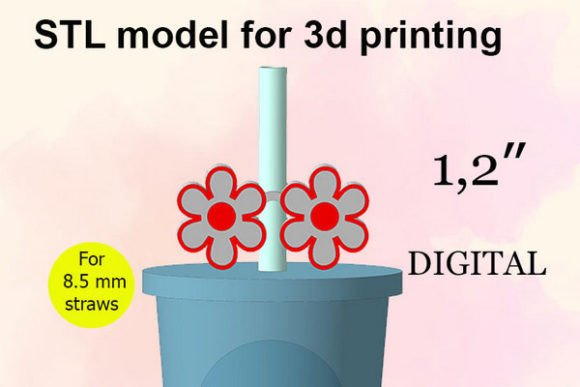
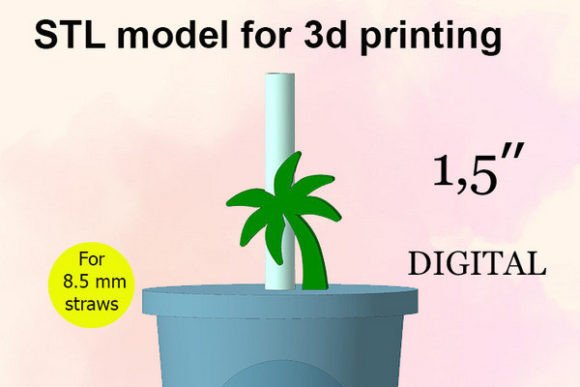
Before acquiring any 3D printable decor, verifying dimensional compatibility is the most critical step. The Palm Straw Topper STL file is engineered specifically for straws with an 8.5 mm diameter. This specification aligns with standard disposable plastic straws and many reusable bamboo or glass options, but it excludes wide-bore boba straws (typically 10–12 mm) and narrow cocktail stirrers. Users must measure their intended straws prior to printing to avoid functional failure.
The product is delivered as an instant download zip file containing a single STL file. STL (Standard Tessellation Language) is the industry-standard format for 3D printing, representing surface geometry through triangular meshing. While universally compatible with slicing software like Cura, PrusaSlicer, or Bambu Studio, it does not contain color or texture data. The visual outcome depends entirely on the filament selected and the printer’s calibration. Because the file is zipped, users should ensure they have extraction software available immediately upon purchase to access the design without delay.
Evaluating Print Service vs. In-House Production
A key decision factor for this product is the production method. You have two distinct pathways:
- In-House Printing: Best for users who already own an FDM (Fused Deposition Modeling) printer and require large quantities at minimal marginal cost. This option offers total control over color changes and batch sizing but requires time for printing, post-processing, and potential troubleshooting.
- Print-on-Demand Services: Ideal for those without hardware or those needing professional-grade finishes (such as resin printing for higher detail). While the per-unit cost is significantly higher, this eliminates technical barriers and ensures consistency. Many services can print directly from the provided STL file.
For events requiring fewer than ten toppers, a print service may be more economical when factoring in filament waste and machine depreciation. For batches exceeding fifty units, in-house production typically offers superior value, provided the user has adequate bed space and nozzle reliability.
Comparative Analysis: 3D Printed Toppers vs. Traditional Alternatives
To make an informed purchasing decision, it is necessary to compare the Palm Straw Topper STL file against other market categories. Each option presents distinct tradeoffs regarding customization, sustainability, and labor.
Versus Mass-Produced Plastic Decorations
Commercially manufactured straw toppers are widely available and inexpensive. Their primary advantage is immediate availability and consistent quality. However, they suffer from limited design variety and fixed color palettes. If your event theme uses a specific shade of sage green or coral, finding an exact match in pre-made plastics is often impossible. The Palm Straw Topper STL file solves this through filament selection, allowing precise color coordination. Additionally, 3D printing generates less packaging waste and avoids the carbon footprint associated with international shipping of low-density plastic goods.
Versus Paper and Cardstock Toppers
Paper-based alternatives are popular for their biodegradability and ease of disposal. They excel in single-use scenarios where cleanup speed is paramount. However, paper lacks durability; it degrades rapidly when exposed to condensation or liquid splashes, potentially compromising the guest experience mid-event. The PLA-based Palm Straw Topper maintains structural integrity throughout the duration of a party and can be washed for reuse. The tradeoff is end-of-life management: while PLA is technically compostable, it requires industrial facilities and will not break down in home compost bins or landfills.
Versus Custom Resin Casting
Silicone molds and resin casting offer high-detail reproduction similar to 3D printing but involve toxic chemicals, longer curing times, and significant manual labor. Resin toppers generally have smoother layer lines than FDM prints. However, the setup cost for molds and materials is high, making resin impractical for one-off events. The STL file approach removes the need for mold-making expertise and hazardous material handling, positioning it as the safer middle ground between paper disposables and artisanal resin crafts.
Material Safety and Practical Limitations
While the Palm Straw Topper STL file offers creative freedom, users must navigate material safety considerations. Most consumer 3D printers use PLA (Polylactic Acid), a bioplastic derived from corn starch or sugarcane. PLA is generally recognized as safe for food contact in its pure form, but several caveats apply:
- Additives and Pigments: Not all filaments are food-safe. Metallic, glow-in-the-dark, or recycled filaments may contain non-food-grade additives. Always verify the manufacturer’s safety data sheet before using printed items with beverages.
- Layer Lines and Bacterial Growth: FDM printing creates microscopic ridges between layers. These crevices can harbor bacteria and are difficult to sanitize completely. For single-use events, this risk is minimal. For reusable applications, consider sealing the print with a food-safe epoxy coating or opting for resin printing, which produces non-porous surfaces.
- Heat Sensitivity: PLA softens at approximately 60°C (140°F). These toppers are unsuitable for hot beverages like coffee or tea. They are strictly designed for cold drinks, smoothies, and room-temperature cocktails.
Understanding these limitations prevents misuse and ensures guest safety. If your event involves hot drinks or requires dishwasher-safe reusability, alternative materials or commercial products may be more appropriate.
Design Integration and Thematic Consistency
The value of the Palm Straw Topper STL file extends beyond mere function; it serves as a cohesive design element. Small accessories create stylistic continuity that larger decorations cannot achieve alone. When evaluating whether this specific design fits your needs, consider the following integration factors:
Scale and Proportion
Refer to the product photos for exact dimensions. A topper that is too large can overwhelm a standard cup or cause balance issues, while one that is too small may lack visual impact. The palm design typically features organic curves that complement natural textures like rattan, linen, and fresh foliage. If your event leans toward geometric art deco or minimalist modern aesthetics, this organic form may clash rather than harmonize.
Color Strategy
Because the STL file is monochromatic by nature, color strategy becomes a deliberate choice rather than an afterthought. Multi-color printing (via filament swaps or multi-material systems) can add depth but increases print time and complexity. Single-color prints in neutral tones (cream, tan, olive) tend to photograph better and blend seamlessly with varied tableware. Bright neon colors, while festive, can sometimes appear cheap in professional photography. Test print a sample in your chosen filament before committing to a full batch to evaluate how the color interacts with lighting and liquid contents.
Decision Framework: When to Choose This Digital Asset
The Palm Straw Topper STL file is not universally superior to all alternatives. It occupies a specific optimal zone. Consider this digital product the right choice if:
- You require exact color matching unavailable in retail stores.
- You have access to 3D printing resources (personal or service-based).
- Your event timeline allows for production lead time (printing 50+ units can take 20–40 hours depending on settings).
- You value customization and uniqueness over immediate convenience.
- Your beverage menu consists exclusively of cold drinks.
Conversely, explore other options if:
- The event is less than 48 hours away and you lack printing infrastructure.
- Budget constraints prohibit both filament costs and service fees.
- You need certified food-safe, dishwasher-durable items for commercial use.
- Your straws deviate significantly from the 8.5 mm standard.
By weighing these factors against your specific event parameters, you can determine whether the Palm Straw Topper STL file represents a practical enhancement or an unnecessary complication. Digital fabrication empowers personalized event styling, but success depends on realistic assessment of technical requirements, safety standards, and logistical constraints. When aligned correctly, this small accessory delivers disproportionate impact, transforming ordinary refreshments into intentional design statements that reinforce your thematic vision.