Clay Cutter STL File - Cobweb Combo 2: Optimizing Your Whimsigoth Designs
The resurgence of whimsigoth aesthetics has created a significant demand for intricate, nature-inspired tools in the maker community. The Clay Cutter STL File - Cobweb Combo 2 addresses this niche by providing a versatile digital asset for creators working with polymer clay, cookie dough, and fondant. This specific digital download is not merely a shape; it is a comprehensive system designed to bridge the gap between delicate jewelry making and larger culinary applications. Understanding the technical nuances of this file pack is essential for achieving professional results, as the difference between a clean cut and a ragged edge often lies in selecting the correct variant for your specific material.
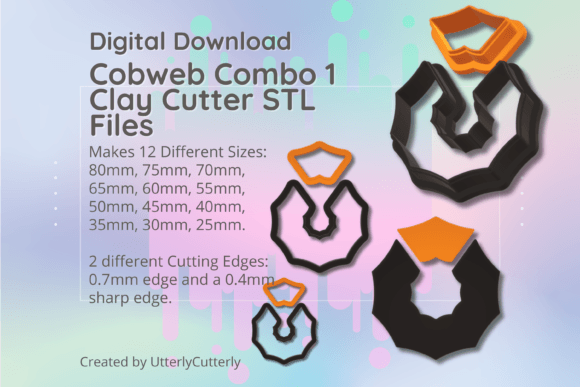
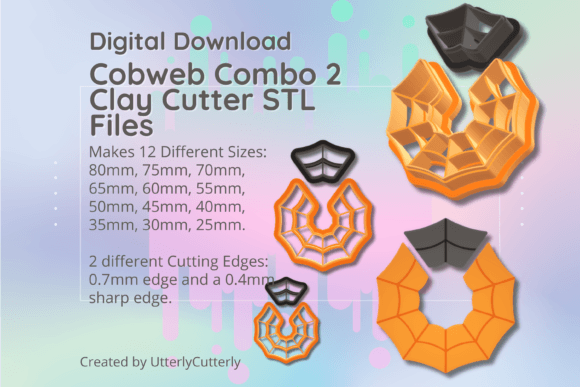
Many makers encounter frustration not because the design is flawed, but because they apply a one-size-fits-all approach to printing and usage. This bundle includes two distinct cutting edge profiles and twelve graduated sizes, ranging from 25mm to 80mm. Recognizing when to utilize the standard wall versus the Sharp Edge (SE) variant is the first step in avoiding wasted filament and compromised projects. By treating these STL files as precision instruments rather than generic outlines, you can significantly elevate the quality of your earrings, pendants, barrettes, and edible decorations.
Distinguishing Between Cutting Edge Profiles
A common oversight when downloading clay cutter STL files is ignoring the blade geometry specifications. This pack offers two distinct types, and using the wrong one for your medium is a frequent source of poor outcomes.
- Standard 0.7mm Wall: This variant features a 0.7mm cutting wall, a 3mm thick base, and a 12mm height. It is robust and ideal for cookies, fondant, or thicker clay slabs where structural integrity during the pressing motion is paramount. Using this on delicate polymer clay earrings often results in distortion or excessive cleanup time.
- Sharp Edge (SE): Abbreviated as SE in the file names, this version utilizes a 1mm support wall tapering to a precise 0.4mm cutting edge. It shares the same 3mm base and 12mm height but is engineered specifically for fine detail work. This is the superior choice for jewelry and small barrettes where a crisp definition is necessary without dragging the material.
Selecting the SE variant for cookie dough may cause the blade to bend or fail under pressure, while using the standard 0.7mm wall for 2mm polymer clay will likely compress the design rather than slice it. Always match the blade profile to the density and thickness of your medium to ensure efficiency and quality.
Sizing Strategies for Multi-Medium Creators
The inclusion of twelve sizes—from 25mm up to 80mm in 5mm increments—offers immense flexibility, but it also requires strategic planning. A misunderstanding here involves assuming all sizes perform identically across different materials. The measurement refers to the longest ends of the cobweb combo shape, which is crucial for layout planning.
For earring creators, the 25mm through 40mm range typically offers the best balance of visual impact and wearability. However, if you are creating statement pendants or hair barrettes, the 50mm to 65mm range provides the necessary canvas for the whimsigoth cobweb details to remain visible from a distance. For culinary applications like cookies and fondant, the 60mm to 80mm sizes are generally most appropriate. Attempting to use the smaller jewelry-sized cutters for standard cookies often leads to breakage during baking or handling, as the surface area-to-perimeter ratio becomes too high. Conversely, using an 80mm cutter for lightweight resin clay earrings can result in pieces that are uncomfortably heavy. Curating your size selection based on the end-use prevents material waste and ensures the final product functions as intended.
Critical Printing Considerations for Durability
Even with the correct file selected, print settings dictate the functional lifespan of your cutter. These STL files are designed for easy printing, but "easy" does not mean "default settings." A frequent mistake is printing with insufficient perimeters or low infill to save time. While the 3mm thick base provides stability, the cutting walls require adequate plastic flow to maintain their geometry.
For the Sharp Edge (SE) files, ensure your printer is calibrated for accurate flow rates. An over-extruded SE blade will lose its 0.4mm advantage, effectively turning it into a standard blade. Conversely, under-extrusion creates weak points that snap when encountering resistance in firm clay or chilled dough. We recommend testing a single small size before committing to printing the entire bundle. Additionally, consider your nozzle size; a 0.4mm nozzle is standard, but if you are exclusively printing the SE variants for high-detail jewelry, a 0.2mm nozzle may yield superior edge definition. Remember that new STL files are added to our store weekly, so establishing a reliable print profile now will streamline your workflow for future expansions of your cutter collection.
Navigating Embossing Lines and Clay Thickness
This digital pack includes embossing lines that are precisely 10.5mm tall. This specification is non-negotiable regarding material preparation. A practical warning for users: these embossers will not function correctly on clay thinner than 1.5mm.
If your rolled clay is too thin, the embossing line will either punch through the material or create an uneven, distorted impression that ruins the whimsigoth aesthetic. Before applying the cutter, always verify your slab thickness with a roller guide or calipers. This is particularly relevant for beginners who tend to roll clay inconsistently. Working with clay thicker than 1.5mm ensures the embossing sits cleanly within the material without compromising the structural integrity of the piece. If you prefer working with very thin clay for micro-jewelry, bypass the embossing function entirely and use the cutter solely as an outline tool, adding texture manually afterward. Understanding this limitation prevents the disappointment of ruined batches and helps you adapt the tool to your personal working style.
Managing Digital Assets and Expectations
It is vital to reiterate that this is a digital download, not a physical item. You must have access to a 3D printer to utilize these files. For entrepreneurs and small business owners integrating these designs into a product line, factor in the post-processing time. Even well-printed cutters may require light sanding on the cutting edge to achieve a glass-smooth finish, especially for polymer clay which shows every imperfection.
Furthermore, organize your downloaded files immediately upon purchase. With two edge types and twelve sizes, you have 24 individual files. Creating a clear folder structure—separating SE from Standard and grouping by size—saves valuable production time later. Misidentifying a file during a busy production run is a simple error that leads to inconsistent product lines. By respecting the technical parameters of the Clay Cutter STL File - Cobweb Combo 2, from blade selection to material thickness, you transform a simple digital file into a reliable component of your creative business. This mindful approach ensures that whether you are crafting delicate gothic earrings or festive Halloween treats, the result is consistently professional and uniquely yours.