Clay Cutter STL File - Cobweb Hoop 1: Technical Specs and Application Guide
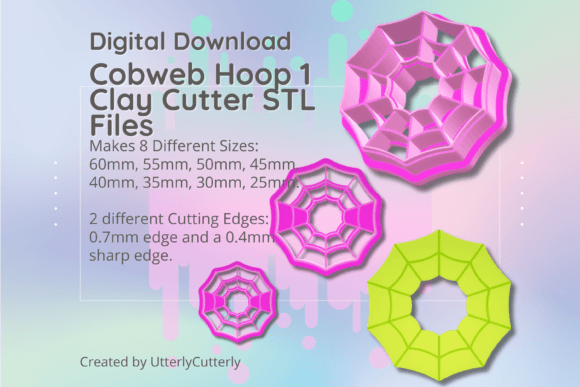
The Clay Cutter STL File - Cobweb Hoop 1 represents a specific niche within digital fabrication for crafters, bridging the gap between seasonal aesthetics and functional tool design. This digital download provides the necessary geometry to 3D print cutters featuring a whimsigoth cobweb hoop shape, intended for polymer clay jewelry, fondant work, and cookie decoration. Unlike generic silhouette cutters, this file set is engineered with distinct blade profiles and dimensional tolerances that affect both the printing process and the final finish of the crafted item. For makers evaluating their digital inventory, understanding the technical distinctions between the included blade types and size variations is essential for determining if this specific STL pack aligns with current production capabilities and artistic goals.
Distinguishing Blade Profiles: Standard vs. Sharp Edge
A critical decision factor when utilizing the Clay Cutter STL File - Cobweb Hoop 1 is selecting the appropriate cutting edge for the intended material. The bundle includes two distinct cutter types, each serving different functional purposes. Understanding these differences prevents material waste and ensures the printed tool performs as expected.
The 0.7mm Wall Configuration
The standard version features a 0.7mm wall thickness with a 3mm thick base and a total height of 12mm. This profile offers increased structural rigidity during the printing process and subsequent use. The thicker wall reduces the likelihood of layer separation or warping on printers with less precise calibration. It is generally better suited for:
- Fondant and Gum Paste: Where a slightly rounded edge helps prevent tearing delicate sugar mediums.
- Stiffer Polymer Clays: Materials like Sculpey III or firmer Fimo variants where additional pressure is required without flexing the cutter walls.
- Beginner Printers: Users still dialing in flow rates and retraction settings will find the 0.7mm wall more forgiving than thinner alternatives.
The Sharp Edge (SE) Configuration
Abbreviated as "SE" in the file names, this variant maintains the same 3mm base and 12mm height but utilizes a 1mm support wall tapering to a 0.4mm cutting edge. This geometry prioritizes precision over durability. The reduced contact surface area allows for cleaner cuts through soft materials with minimal drag. However, it introduces specific tradeoffs:
- Print Difficulty: A 0.4mm tip requires optimal cooling and nozzle calibration. Over-extrusion can easily clog the fine point, while under-extrusion may result in a fragile edge that breaks upon first use.
- Material Limitations: Best reserved for soft polymer clays (e.g., Soufflé, Cosclay) or rolled cookie dough. Harder materials may deform the thin edge over time.
- Finish Quality: Produces significantly less cleanup work post-cutting, making it ideal for intricate earring components where sanding a thick ridge is undesirable.
Evaluating Size Versatility and Embossing Tolerances
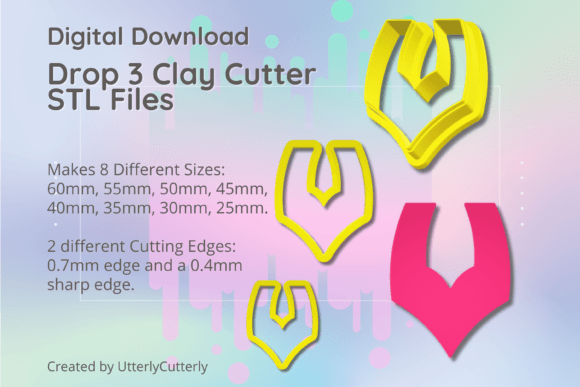
The Clay Cutter STL File - Cobweb Hoop 1 bundle includes eight incremental sizes ranging from 25mm to 60mm. This gradation supports modular design workflows rather than single-use applications. When comparing this set to standalone cutters, the value lies in the ability to create nested designs or graduated jewelry sets without sourcing multiple disparate files.
Dimensional Considerations
Cutter measurements are taken from the longest ends, which is standard for irregular shapes but requires attention when planning slab dimensions. The available sizes are:
- 60mm – Suitable for statement pendants or large cookies.
- 55mm and 50mm – Ideal for barrettes and substantial earrings.
- 45mm and 40mm – Standard earring sizing.
- 35mm, 30mm, and 25mm – Accent pieces, charms, or detailed fondant accents.
Embossing Line Compatibility
An often-overlooked specification in this STL pack is the embossing line height of 10.5mm against a total cutter height of 12mm. This leaves only 1.5mm of clearance above the detail line. Consequently, this tool is not suitable for thin clay sheets. If working with clay thinner than 1.5mm, the cutter will bottom out before the embossing detail fully registers, resulting in incomplete impressions. Makers must condition clay to at least 2mm thickness to utilize the decorative elements effectively. This constraint differentiates the Clay Cutter STL File - Cobweb Hoop 1 from shallow outline-only cutters and necessitates proper slab preparation.
Comparative Analysis: Digital STL vs. Physical Alternatives
When researching cutter options, creators typically choose between purchasing physical metal/plastic cutters or acquiring digital STL files like this cobweb hoop design. Each approach presents distinct advantages depending on production volume and customization needs.
Customization and Iteration Speed
Digital files offer immediate adaptability. If a maker requires a 48mm cutter for a specific earring backing, they can scale the 50mm file by 96% in their slicer software. Physical cutters lack this flexibility. Furthermore, the weekly release schedule mentioned for this store allows collectors to build a cohesive aesthetic library over time, ensuring new seasonal releases match existing inventory. Physical suppliers rarely maintain such consistent stylistic continuity across batches.
Cost Efficiency and Lead Times
For occasional users, buying a single physical cutter may be cheaper when factoring in filament costs and machine depreciation. However, for those producing collections or fulfilling custom orders, the per-unit cost of 3D printed cutters drops significantly after the initial printer investment. There are no shipping delays with the Clay Cutter STL File - Cobweb Hoop 1; access is immediate upon download. This eliminates supply chain variables that often disrupt seasonal crafting timelines, particularly relevant for time-sensitive holidays like Halloween.
Durability and Longevity Tradeoffs
It is important to acknowledge that PLA or PETG printed cutters do not possess the longevity of stainless steel. The 0.4mm SE blades, in particular, should be viewed as semi-consumable tools. They may require reprinting after extended use with abrasive materials. Physical metal cutters last indefinitely but cannot be replaced instantly if lost or damaged. The digital format shifts maintenance from storage care to active reproduction management.
Technical Requirements and Print Optimization
Successfully producing functional tools from the Clay Cutter STL File - Cobweb Hoop 1 requires adherence to specific printing parameters. These files are designed for ease of printing, but "easy" assumes baseline competency in slicing small, detailed objects.
- Nozzle Selection: While a 0.4mm nozzle can handle the 0.7mm wall, a 0.25mm or 0.3mm nozzle is strongly recommended for the SE variant to accurately reproduce the 0.4mm cutting edge without excessive squish.
- Layer Height: Maximum 0.12mm layer height is advised for the cutting edge region to ensure smoothness. Thicker layers create stair-stepping that transfers texture to the clay.
- Infill and Walls: Use 100% infill or increase wall counts to 3-4 perimeters. Hollow cutters trap moisture and bacteria, making them unsuitable for food-safe applications even with sealing.
- Orientation: Always print with the cutting edge facing up to avoid support structures on the functional surface. The 3mm base provides adequate adhesion without brims in most cases.
Determining Fit: When to Choose This Resource
The Clay Cutter STL File - Cobweb Hoop 1 serves a specific segment of the maker community. It is an optimal choice for creators who already own a calibrated 3D printer and require versatile, aesthetically cohesive tools for mixed-media projects spanning jewelry and culinary arts. The dual-blade option accommodates varying skill levels and material preferences within a single purchase.
Conversely, this digital product may not be the right fit for individuals without 3D printing access or those unwilling to manage print failures associated with fine details. Additionally, makers exclusively working with ultra-thin clay veneers (under 1mm) should seek alternative cutters with shallower profiles, as the 10.5mm embossing depth here exceeds their operational parameters. Finally, commercial bakeries requiring NSF-certified equipment should avoid FDM-printed tools entirely due to food safety regulations regarding layered plastics.
Ultimately, evaluating this STL bundle requires balancing convenience against technical capability. The comprehensive size range and dual-edge options provide significant utility for prepared users, transforming a simple digital file into a flexible production asset for whimsigoth-themed creations. By assessing personal equipment readiness and material workflows against these specifications, makers can make an informed decision about integrating this resource into their digital fabrication library.